




It is 5:30pm and a mother rushes in from Third Mainland Bridge traffic to pick up her one year old. Before she even says hello, she asks the question every crèche parent asks: “Did she eat? Did she sleep? Was she okay today?”
Your caregiver tries to remember. “She ate well… I think she slept around 12.” The mother nods, but she drives home with questions in her heart. She is paying good money, and she wants to know exactly how her baby’s day went.
A crèche daily report sheet answers those questions before they are asked. In this guide, you will learn what a daily report is, what to include for babies and for toddlers, how to make daily reports easy for busy caregivers, and why they are one of the simplest ways to build trust with parents. At the end, you can download our free Crèche Daily Report Sheet.
What is a crèche daily report sheet?
A crèche daily report sheet is a short record of each child’s day that goes home with the parent at pickup. It shows when the child arrived and left, what they ate, when they slept, nappy changes or toilet visits, their mood, what they learned, and anything the parent needs to know or bring.
For babies, the daily report is mostly about care: feeds, nappies and naps. For toddlers and preschoolers, it becomes a window into learning: what they played, what they discovered and what to talk about at home.
Why daily reports matter for Nigerian crèches
- Parents feel connected. Working parents in Lagos, Abuja and Port Harcourt spend long hours away from their children. A daily report lets them share in the day they missed.
- It builds trust. Specific details show that your caregivers are truly watching each child, which is exactly what parents pay for.
- It protects your school. If a parent asks about a bump, a missed meal or a medicine dose, you have a written record.
- It spots patterns early. A baby who has refused feeds for three days, or a toddler who has been unusually tired all week, shows up clearly on paper.
- It shows the value behind your fees. Parents who can see the care their child receives are far more likely to pay school fees on time.
What to include in a daily report for babies
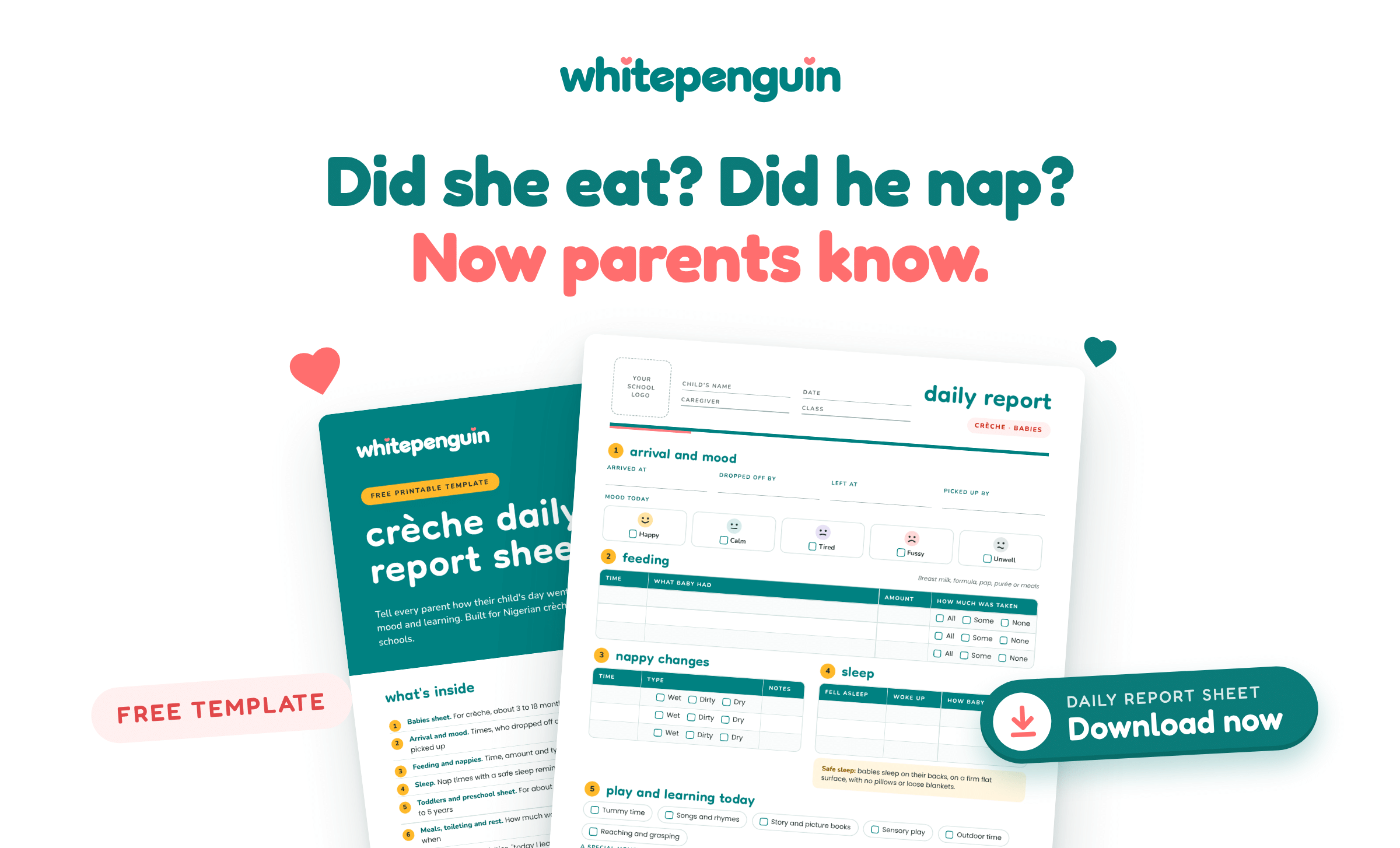
Babies cannot tell their parents about their day, so the daily report does it for them. Our free template includes:
- Arrival and departure. Times, plus who dropped the baby off and who picked them up. This matters for safety, so match it against the authorised pickup list on your crèche admission form.
- Mood. Happy, calm, tired, fussy or unwell, so parents know what to expect at home tonight.
- Feeding. The time, what the baby had (breast milk, formula, pap, purée or family food), the amount, and whether they took all, some or none.
- Nappy changes. The time and whether the nappy was wet, dirty or dry. Parents and doctors use this to check that a baby is feeding and staying hydrated.
- Sleep. When the baby fell asleep and woke up. Always follow safe sleep practice: babies sleep on their backs, on a firm, flat surface, with no pillows or loose blankets.
- Play and learning. Tummy time, songs and rhymes, books, sensory play and one special moment from the day.
- Health and supplies. Any medicine given (with the dose, time and signature), any incidents, and what the parent should bring tomorrow, such as diapers, wipes or formula.
What to include in a daily report for toddlers and preschoolers
As children grow, the daily report shifts from care to learning. For toddlers and preschoolers, include:
- Meals and snacks. Breakfast, morning snack, lunch and afternoon snack, with how much was eaten.
- Toileting. Diaper, potty or toilet, which helps families stay consistent during toilet training.
- Rest time. When the child slept, or whether they rested quietly.
- What we did today. Language and stories, numbers, art, music and movement, outdoor play, pretend play, science and phonics.
- Today I learned. One specific thing the child learned or tried for the first time.
- Ask me about. A question parents can use to start a conversation at home, such as “Ask me about the snail we found.”
Over time, these daily notes become the evidence for your child milestone tracker and your termly progress report card.
How to make daily reports easy for caregivers
- Fill it in as the day happens. Keep the sheets on a clipboard in each room and write feeds, naps and changes at the time, not from memory at closing.
- Use ticks wherever possible. Checkboxes for mood, nappies and activities save time and keep reports consistent.
- Write one real detail. “Chidera clapped along to ‘If you’re happy and you know it’ for the first time” means more to a parent than “Had a good day.”
- Check before pickup. A lead caregiver should glance over every sheet before parents arrive.
- Keep a copy. Snap a photo before handing the sheet over, or keep a carbon copy, so the school has a record.
Daily reports and Nigerian early childhood standards
Good record keeping is part of running a quality early childhood centre. The Nigerian Educational Research and Development Council (NERDC), working with UNICEF, has developed a National Early Childhood Curriculum for ages 0 to 5, a National Minimum Standard for Early Childhood Centres and a caregivers manual. Daily reports help your crèche show the kind of careful, child centred care these standards describe.
Early childhood care is also a national priority. The Universal Basic Education Commission has said that about 10 million Nigerian children are missing out on early childhood care, development and education, and UNICEF Nigeria continues to push for more children to access quality early learning. Every well run crèche is part of closing that gap.
Common daily report mistakes to avoid
- Copying the same words every day. “Good day, ate well” every afternoon tells parents nothing and makes them wonder if anyone is watching.
- Filling it in at closing time. Times and amounts written from memory are often wrong.
- Leaving out incidents. If a child bumped their head, the parent must hear it from you first, in writing and in person.
- Giving medicine without a record. Always write the medicine name, dose and time, and have the caregiver sign.
- Losing the sheets. A report that never reaches the parent might as well not exist.
Paper daily reports or a parent app?
Paper daily reports are a great start. But when one caregiver has eight toddlers, writing a full sheet for each child every day takes real time, and sheets get lost in school bags. Many parents would rather see updates on their phone during the day.
That is why growing crèches use WhitePenguin. Caregivers log meals, naps, nappies, moods and photos on a phone in seconds, and parents see them instantly. It is one simple app built for Nigerian crèches, preschools and nursery schools, and it can help you increase enrolment, because happy parents tell their friends.
Book a free WhitePenguin demo to see how it works for your school.
Frequently asked questions
What should a crèche daily report include?
Arrival and pickup times, who dropped off and collected the child, mood, meals or feeds, nappy changes or toilet visits, naps, activities and learning, any medicine or incidents, and supplies the parent needs to bring.
Do toddlers and preschoolers need daily reports too?
Yes. For older children, the daily report focuses more on learning, such as what they played, what they learned and a question parents can ask at home, while still recording meals, toileting and rest.
Should daily reports be on paper or digital?
Both work. Paper sheets are simple and free to start with. Digital daily reports through a parent app save caregivers time and let parents see updates during the day.
How long should a daily report take to fill?
With a good template, a few minutes per child spread across the day. Fill in feeds, naps and changes as they happen and add one personal detail before pickup.
Why should a crèche record nappy changes?
Nappy records help parents and doctors check that a baby is feeding well and staying hydrated, and they show parents that their baby was cared for throughout the day.
Download Your Free Crèche Daily Report Sheet
WhitePenguin builds practical, Nigeria specific tools for crèche and preschool owners who want every parent to feel close to their child’s day. Our free daily report sheet includes a babies sheet and a toddlers and preschool sheet, ready to print with your school logo.
Download the free WhitePenguin Crèche Daily Report Sheet now